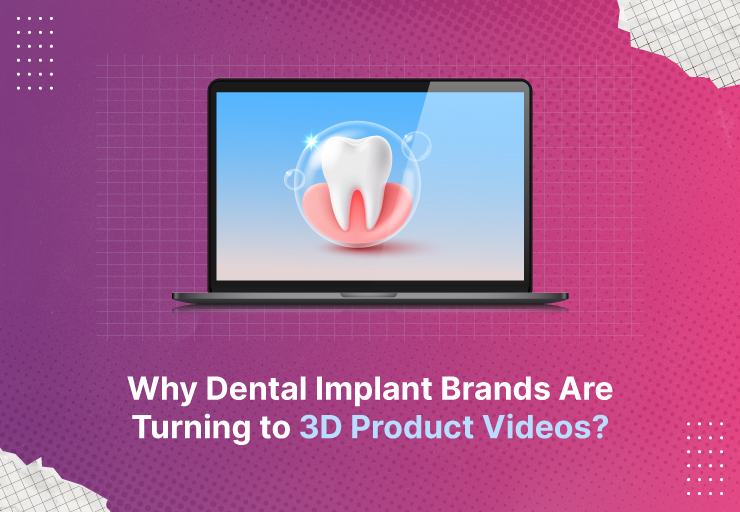
Your patient is sitting across from you, nodding politely as you explain a treatment. You’ve shown them the brochure, maybe a photo or two, and you can tell, they’re still not convinced. They want to see it, but not just a flat image. They want to understand every curve, connection, and component… and in that moment, words aren’t enough. This also happens on social media. Sometimes, the pictures and even videos are not enough. The 3D animation videos could do justice.
With 3D product videos, you don’t even touch the physical model. Instead, you give them something they can turn, zoom in on, and explore from every possible angle… without lifting a finger.
These 3D product videos can increase conversions by 94% compared to static images, keep viewers actively engaged, and build the kind of trust that leads to confident decisions.
When the service you’re offering changes lives, showing every detail in a way that allows them to experience it without physically holding it might just be the most persuasive conversation you’ve ever had.
Well, let’s understand more about what 3D product videos are, how product promotional videos make sense for dental implants, and how to get started. Let’s get to it.
What are 3D Product Videos, Exactly?
These are 3D videos made from 3D models that show a product from every angle, almost as if you’re holding it in your hand. They are interactive, letting people zoom and rotate, or more guided, where the video highlights key details.
Instead of a flat photo, you can see how it looks, moves, and fits in real life. In dental implants, this means showing the exact design, size, and placement, sometimes even taking viewers through the entire process step-by-step.
The idea is simple: give people a clear, realistic view so they understand better and feel confident about it before making a decision.
The Complex Nature of Dental Implant Products
Dental implant products have a complex structure because they are designed to replace a missing tooth in both function and appearance.
At their core, they consist of three main parts: the implant post (a titanium or zirconia screw placed in the jawbone to act like a tooth root), the abutment (a connector that links the implant post to the crown), and the crown (the visible tooth replacement). Each part is made with precision using biocompatible materials, ensuring durability, strength, and safety for long-term use.
The complexity comes from the need to fit perfectly in the mouth, bond with bone, and withstand daily chewing forces, while also looking and feeling natural.
Additional Read:
Why Product Videos Are Your Best Salesperson in 2025 (And How to Make Them Work)?
Why 3D Product Videos Make Sense for Dental Implants?
1. Bring Product Mechanics to Life
It’s hard for people to understand how a dental implant works just by hearing about it or seeing a picture. A 3D product video makes it easier by showing the implant in detail—every part, how they connect, and how it fits into the jaw.
You can show the screw threads, the surface texture, and the way it’s placed step-by-step. This helps people see what you’re talking about, instead of trying to imagine it. With these details(clear and straight), they can make the right decision.
2. Help Dentists Understand Faster
Even experienced professionals appreciate visuals that make complex products easier to grasp. With 3D product videos, you can show every angle of the implant, demonstrate how it functions, and highlight design features that set it apart.
Instead of reading long technical descriptions or flipping through diagrams, they can watch a quick, clear video and immediately understand what makes the product effective. This saves time, avoids confusion, and makes it easier for them to decide whether the implant meets their needs.
3. Enhance B2B Sales Presentations and Demos
When selling implants to other businesses, the way you present them matters just as much as the product itself. A 3D product video can instantly make your sales pitch more engaging by showing the implant in action.
It shows how it’s designed, how it’s placed, and why it works better than alternatives. Instead of relying on static slides or product samples, you can give your audience a realistic, close-up look without leaving the meeting room. This not only keeps their attention but also helps them remember the details long after the presentation is over.
4. Stand Out in a Crowded Market
The dental implant industry is competitive, and many products can look similar at first, which can make things confusing. But a 3D product video comes to the rescue and gives you a way to showcase your implant in a way that’s easy to understand and is memorable.
By showing unique design elements, material quality, and real-life application in vivid detail, you make your product more memorable than a brochure or static photo ever could. It sends a message that you’re offering a quality implant with modern, professional tools to present it, helping you stay ahead of competitors who still rely on traditional marketing.
5 . Reusable Across Channels
One of the best things about 3D product videos is that they’re not limited to a single use. The same video you create for a sales presentation can also be used on your website, in social media campaigns, email marketing, or even on display screens in your clinic.
You can cut shorter clips for ads, add voiceovers for training, or adapt them for trade shows. This makes them a cost-effective asset; once produced, they keep working for you across multiple platforms without needing to start from scratch every time.
How to Get Started With 3D Product Videos
1. Choose the Right Animation Partner with Medical Product Experience
If you’re serious about creating a 3D product video for a dental implant, start by picking a team that has worked on medical products before. This isn’t like making a generic product animation; every curve, thread, and connection in your implant has to be accurate.
A partner with medical animation experience will understand the importance of precision, know how to represent materials realistically, and be able to highlight features in a way that both professionals and patients can understand. This saves you time, avoids costly rework, and ensures your video builds trust instead of raising questions.
Expert Tip: Ask potential partners for samples of past medical or dental projects and request client references. Seeing their previous work will help you judge both accuracy and quality before you commit.
2. Start with one high-impact product or procedure
Don’t try to create 3D videos for your entire product range right away. Begin with the product or procedure that has the biggest impact on your business, whether it’s your best-selling implant or the treatment you most want to promote.
This focused approach helps you perfect the process, test how your audience responds, and refine the style before investing in more videos. Once you see the results, it becomes much easier to expand to other products with confidence.
Expert Tip: Pick a product that’s easy to market visually, something with clear features or a strong patient success story, so your first video not only looks great but also connects emotionally with viewers.
3. Reuse assets for AR, VR, training, and social clip
When you create a 3D product video, you also create a detailed 3D model of your implant. A well-made 3D product video isn’t just for one purpose—it can become a long-term asset.
The same 3D model can be adapted for augmented reality demos, virtual reality training sessions, educational materials, short clips for social media email marketing. By reusing the same asset, you keep your visuals consistent, save on production costs, and get more value from the work you’ve already done.
Expert Tip: When negotiating with your animation partner, make sure your contract includes ownership of the 3D model files. This ensures you can repurpose and adapt the assets in the future without paying to recreate them from scratch.
4. Budget Considerations: One-time Investment with Multi-Channel ROI
3D product videos are expensive, there’s no denying that. But when you plan the budget for one, focus on the return it can generate for your brand. A single, well-made 3D video can work across your website, sales presentations, social media, trade shows, email campaigns, and even training programs, without paying to recreate the visuals each time.
That said, you don’t have to overspend. Get pricing estimates from different 3D video production companies, compare the value they offer, and choose the partner who best meets your needs and budget.
Expert Tip: When comparing quotes, don’t just look at the price; look for value. Ask about the work they have done, their client testimonials, and you will get the file ownership, etc.
To Wrap It All!
You’ve now seen how a one-time investment can deliver value across multiple channels and create lasting ROI. The key is to act strategically, choosing the right tools, partners, and approach that align with your business goals.
Remember, the smartest investments don’t just pay for themselves; they continue to drive growth long after the initial spend. If you’re ready to turn your budget into a profit engine, now is the time to take that step and make every rupee work harder for you.
At Krisha Studio, we specialize in product video production for dental implants, with a team that understands this industry inside out. We know how to capture every detail, highlight your product’s unique strengths, and create visuals that build trust and inspire action.
To know more about us, how we can help you, and more, book a free consultation call today.
Frequently Asked Questions(FAQs)
1. How long does it take to produce a 3D product video for dental implants?
Production timelines vary depending on the complexity of the implant design, the number of scenes, and the level of detailing required. On average, you can expect 4–8 weeks from concept to delivery if all assets and feedback are provided on time.
2. What file formats do I get for my 3D product video?
Most studios will provide you with high-resolution video files (MP4 or MOV) and, if arranged in the contract, the original 3D model files for repurposing. Make sure to confirm file ownership before starting.
3. How do I ensure the 3D product video is medically accurate?
Provide your animation partner with precise CAD files, design drawings, and clear product references. Also, review each stage of production to ensure accuracy before final delivery.
4. Can I include branding and marketing messages inside the 3D video?
Absolutely. You can integrate your logo, brand colors, taglines, and even voiceovers or text overlays to make the video feel like an extension of your brand identity.
5. Can the same 3D video be localized for different countries or markets?
Yes. You can easily adapt the same visuals with translated voiceovers, subtitles, or region-specific details without having to remake the entire animation to save time and costs.
6. What’s the typical cost range for a high-quality 3D dental implant video?
Costs vary widely depending on complexity, length, and level of interactivity. For a high-end medical-grade animation, expect anywhere from $2,000 to $10,000 or more. But always request a detailed quote to understand what’s included.