In verbal consent discussions with healthcare providers, the complexity of medical procedures creates anxiety while affecting patients’ ability to retain information.
Explainer videos help build on this anxiety by visually presenting risk, benefit, and procedure through video format; studies published in peer-reviewed journals demonstrate an increase of 8% to 20% in comprehension of the procedure when watching an explainer video.
This guide presents an overview of research produced in .gov and .edu domains, highlighting areas covered by the best articles published in this field, including a lack of quantifiable ROI and a lack of a clear implementation plan.
Understanding Informed Consent Challenges
Patients should be able to understand the procedures, risks, alternative options, and benefits before providing informed consent.
Because traditional verbal/paper patient education methods have yielded a 50-70% level of patient understanding, numerous factors contribute to the difficulty of helping patients attain informed consent, including the complexity of medical terminology, the level of stress, and time limitations placed on healthcare providers to explain information.
With that said, there is still a risk that the patient providing consent is uninformed or misinformed. In addition, it exposes healthcare providers to a risk of lawsuits based on allegations of invalid consent.
However, the time that healthcare providers spend conducting informed consent is significant. An anesthesiologist spends about 45 minutes conducting and signing a patient’s bedside consent.
Additional Read:
Explainer Video Ads: Best Formats for High-ROI Paid Campaigns
Benefits of Explainer Videos for Consent
Video enhances patient knowledge retention in a study comparing (94% understanding) anesthesia video to (lower verbal rate) with (96% understanding) of risks. In hip replacement surgery, video demonstrations improved overall knowledge comprehension by 8.7% from baseline (78.6% to 86.5%, p-value < 0.014).
Also, reduces anxiety, increases satisfaction level, and creates equitable access to information regardless of the provider utilized.
Key Stats from Recent Studies
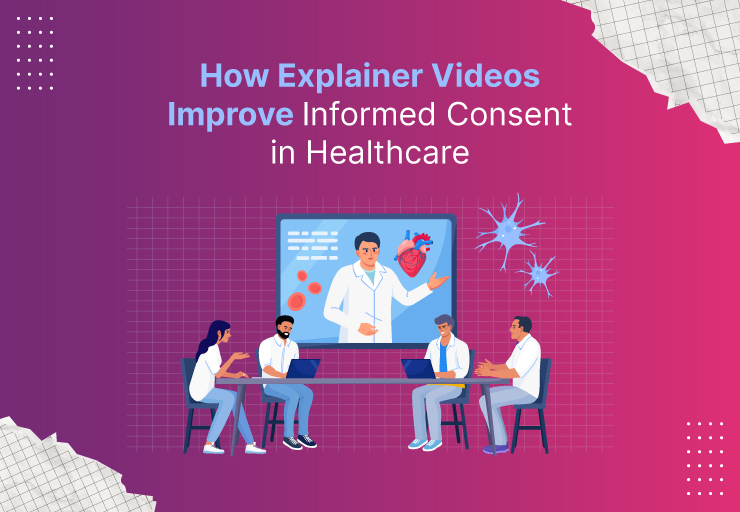
Explainer videos use animations for complex visuals (e.g., intubation, hip surgery), breaking info into digestible steps. They standardize delivery, reducing provider variability, and allow rewatching/Q&A.
Step-by-Step Video Creation for Consent
- Core Components of the script: Processes, Risks (10 – 17% More Likely to Recall), Alternatives, Advantages;
- Animated Illustrations with Anatomic Images and Subsequent Steps without Gory Elements, to alleviate anxieties.
- Professional Narration and Accessible Subtitles.
- Verify Comprehension (Pre/Post Assessments) and Improve.
- Include Q&As with Provider for Legal Purposes.
Conclusion
According to studies through the Journal of Health Communication on the Patient-Centricity Model (PMC), explainer videos increase patient understanding (as much as 86.5 percent) and standardize information and time savings.
KrishaStudio works with health professionals to produce animated videos that clarify complex information and alleviate fear about treatment options (e.g., dental procedures) while also improving compliance, leading to positive patient outcomes.
Create custom animation to empower patients and support your organization’s workflow with KrishaStudio. Elevate your level of informed consent today!